

Wondering how a church actually gets planted, or what to avoid along the way? DOVE USA is a church-planting movement, and we use several models: community churches, micro churches, and small groups that grow into congregations.
Wherever you are in the process, there is a next step.
Church planting takes more than a launch plan. DOVE comes alongside planters before launch, while the team is forming, and after the church begins gathering.




Built around Charles Ridley’s thirteen characteristics of effective church planters. The assessment helps identify strengths and growth areas, and a DOVE church-planting coach follows up personally to help you consider the next step.
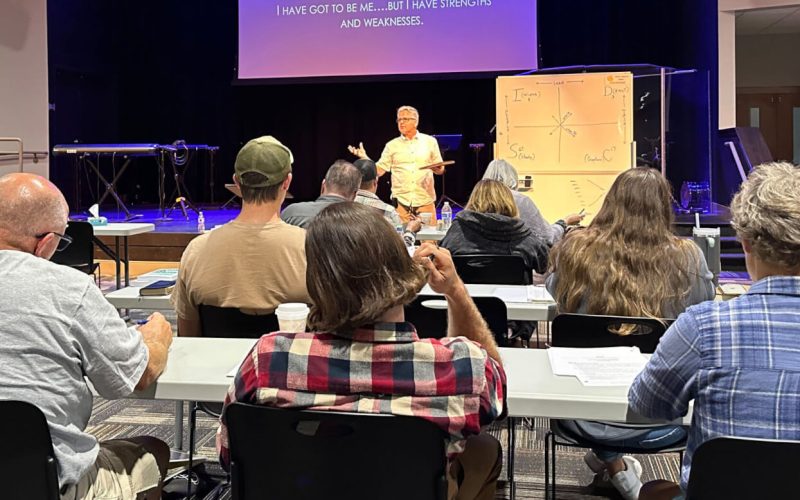
Twenty-four practical sessions designed to help you move from calling to launch. The current program is offered for $99, and you can watch a sample class before deciding.

A free manual from the DOVE USA apostolic team with practical guidance for planting churches and advancing the Great Commission.

A free tool that helps you and your team understand how you are wired, how you interact, and where different personalities can strengthen the launch team.

Free planning tools to help you build a realistic first-year budget, anticipate costs, and make financial decisions before launch.
DOVE plants churches in different forms because communities are different. Some begin as larger community churches. Others grow from homes, small groups, or networks of micro churches.
Church plants designed to gather a broader local community around worship, discipleship, mission, and biblical leadership.
Smaller expressions of church built around relationships, discipleship, mission, and multiplication, often gathering in homes or other everyday spaces.
Some churches begin with a group of people learning to follow Jesus together and grow naturally into a congregation.
(717) 627-1996
Dr. Charles Ridley conducted a study of church planters in the United States and Canada. Based on his research and subsequent field testing, he developed a list of thirteen characteristics that define effective church planters.
"*" indicates required fields
This form is protected by reCAPTCHA and the Google Privacy Policy and Terms of Service apply.
After you register and complete payment, you'll receive your login information and a link to access the Boot Camp. Work through the courses in order at your own pace. After you watch each course and complete its questions, the next course will unlock. You'll have access to the full program for one year.
"*" indicates required fields
This form is protected by reCAPTCHA and the Google Privacy Policy and Terms of Service apply.
Tell us where to send them and they are yours.
"*" indicates required fields
This form is protected by reCAPTCHA and the Google Privacy Policy and Terms of Service apply.
There are a few guidelines to follow when taking the Personality Profile.
You will be asked 92 short questions. Each question will have five possible answers:
A first-year church planting budget comes with plenty of unknowns. Start with what you know, estimate what you don’t, and build a financial plan you can refine as the church grows.
A clear budget helps you anticipate expenses, recognize potential challenges, and make better financial decisions before they become urgent. Tracking income and expenses throughout your first year also gives you real numbers to work from when planning the next.
If administration isn’t your strength, involve someone who is gifted in it. The church planter doesn’t have to build the budget alone, but every church plant should have one.
For more guidance on budgeting and the church planting process, explore Church Planting Made Practical, compiled by Ron Myer with Jeff Hoglen.